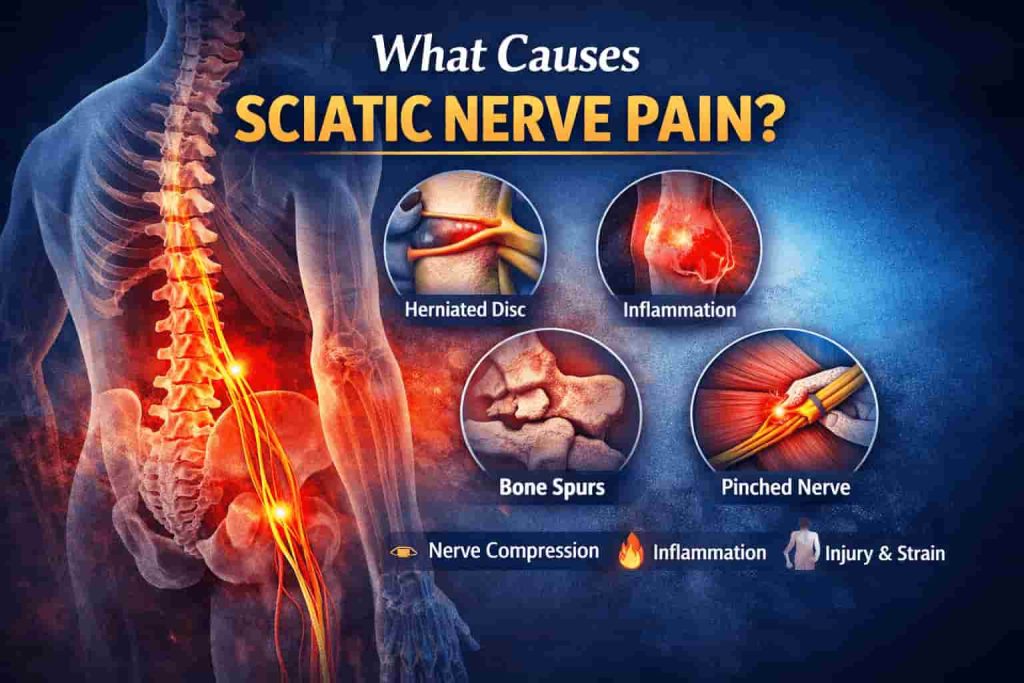
Sciatic nerve pain is a common source of lower-body discomfort that can interfere with mobility, sleep, and everyday activities. It is often described as a sharp, burning, tingling, or radiating sensation that travels from the lower back or hip down through the leg. While the symptoms are widely recognized, the underlying causes of sciatic nerve pain can vary significantly from person to person.
Understanding what causes sciatic nerve pain is an important first step toward managing symptoms, reducing flare-ups, and making informed decisions about lifestyle habits and supportive care options. This article explains the most common triggers, the role of inflammation, and factors that may increase the risk of developing sciatic discomfort.
What Is Sciatic Nerve Pain?
The sciatic nerve is the longest and largest nerve in the human body. It originates in the lower spine, passes through the hips and buttocks, and extends down each leg to the feet. Sciatic nerve pain occurs when this nerve becomes irritated, compressed, or inflamed along its pathway.
Common sensations associated with sciatic nerve pain include:
- Sharp or shooting pain in the lower back, hip, or leg
- Tingling or “pins and needles” sensations
- Numbness or reduced sensation in the leg or foot
- Burning or aching discomfort that worsens with movement or prolonged sitting
Sciatic nerve pain is a symptom rather than a condition itself, meaning it usually reflects an underlying issue affecting the nerve or surrounding tissues.
Most Common Causes of Sciatic Nerve Pain
Sciatic nerve pain often results from a combination of structural, inflammatory, and lifestyle-related factors rather than a single cause.
Disc Herniation or Bulging Discs
One of the most common causes of sciatic nerve pain is a herniated or bulging disc in the lower spine. When spinal discs shift or degenerate, they may press against the sciatic nerve roots, leading to irritation and pain that radiates down the leg. Age-related disc degeneration can increase the likelihood of this type of nerve compression.
Inflammation Around the Sciatic Nerve
Inflammation plays a significant role in sciatic nerve pain. Swelling in the tissues surrounding the nerve can increase pressure and sensitivity, even in the absence of direct compression. Inflammatory chemicals released by irritated tissues may heighten nerve signaling, making discomfort more noticeable and persistent.
Muscle Tightness and Nerve Compression
Tight or spasming muscles, particularly in the hips and buttocks, can compress the sciatic nerve. The piriformis muscle, which runs close to the sciatic nerve, is commonly associated with this type of nerve irritation. Muscle-related compression may worsen with prolonged sitting or certain physical activities.
Poor Circulation and Nerve Irritation
Healthy blood flow is essential for delivering oxygen and nutrients to nerve tissues. Reduced circulation may contribute to nerve irritation and delayed recovery. Factors such as prolonged inactivity, vascular issues, or metabolic health changes can influence circulation and may indirectly affect sciatic nerve comfort.
Injury, Overuse, or Repetitive Stress
Repetitive movements, improper lifting techniques, prolonged sitting, or sports-related strain can place stress on the lower back and hips. Over time, this strain may contribute to nerve compression, muscle imbalance, or inflammation that triggers sciatic discomfort.
How Inflammation Contributes to Sciatic Pain
Inflammation is a common underlying factor in many cases of sciatic nerve pain. When tissues around the sciatic nerve become inflamed, they can release chemical messengers that sensitize nerve endings. This heightened sensitivity may cause pain signals to become stronger or more frequent, even with minimal movement or pressure.
Inflammation may also interact with oxidative stress, which can affect nerve tissues over time. These processes help explain why sciatic symptoms often fluctuate, worsen during flare-ups, or improve gradually rather than resolving instantly.
Lifestyle and Health Factors That May Increase Risk
Certain lifestyle and health-related factors may increase the likelihood of developing sciatic nerve pain or experiencing recurring episodes:
- Prolonged sitting or sedentary routines
- Poor posture or inadequate ergonomic support
- Excess body weight placing pressure on the spine
- Chronic stress, which may increase muscle tension
- Inadequate sleep and recovery
- Age-related changes in spinal and nerve health
Addressing these factors through movement, posture awareness, stress management, and healthy routines may help reduce overall nerve strain.
Can Nutritional Support Play a Role?
Some individuals also explore nutritional supplements designed to support nerve comfort, circulation, and inflammation balance as part of a broader wellness approach. One such option is discussed in our Arialief supplement review, which examines how certain nutrients are commonly used to support nerve health. Nutritional supplements are not a substitute for medical care, and individual results vary.
When to Seek Medical Evaluation
While occasional sciatic discomfort may improve with rest and lifestyle adjustments, medical evaluation is recommended if symptoms:
- Persist for several weeks or worsen over time
- Are accompanied by weakness or loss of coordination
- Involve significant numbness or loss of sensation
- Interfere with walking, balance, or daily function
A qualified healthcare professional can help determine the underlying cause and recommend appropriate treatment or diagnostic testing when needed.
Key Takeaways
- Sciatic nerve pain has multiple potential causes, including disc issues, inflammation, muscle tension, and circulation factors.
- Inflammation and nerve sensitivity play a major role in symptom severity and persistence.
- Lifestyle habits such as posture, movement, stress management, and sleep can influence nerve comfort.
- Nutritional support may be considered as part of a broader wellness strategy, but it does not replace medical care.
Understanding the causes of sciatic nerve pain can help individuals make informed decisions about prevention, symptom management, and long-term nerve health support.